Panama | Birding Central Panama and the Darién Lowlands with Bedford Audubon Society - NEW TOUR

Date:
Feb 17 - Feb 27, 2025
Duration:
11 Days
Price:
From $3,565
Interests:
Join Waitlist This departure is SOLD OUT Print Itinerary

About this trip

Panama boasts the highest diversity of bird species in Central America, so the country’s advantageous location at the convergence of two continents makes it the prime respite for migratory birds from both North and South America. Join Bedford Audubon Society on an unforgettable 11-day birding journey across several fascinating regions of Panama, including the country’s easternmost province of Darién. Visit well-known birding trails, tropical rainforests, wetlands, mudflats, and much more. Enjoy the chance to explore not only noteworthy public and private reserves, but also witness the Panama Canal’s Miraflores Locks in action, and learn about Panama’s role as an international trade center and its many historical sites.

Highlights

  • Discover two of Panama City’s stunning natural areas, the Metropolitan Natural Park and the Panama Bay Mudflats, for encounters with fascinating wildlife, especially shorebirds.
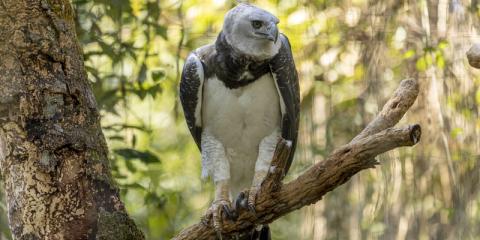
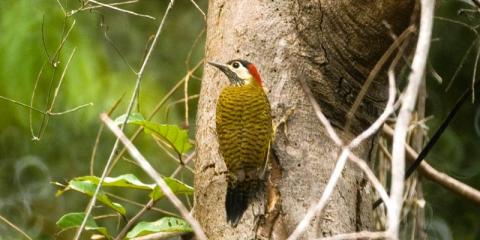
  • Venture into the Darién Province’s many birding hotspots, including the San Francisco Reserve, Chucunaque River, El Salto Road, and the Yaviza wetland, to see some of the country’s hundreds of bird species like the Crimson-bellied Woodpecker, Black Oropendola, Red-throated Caracara, and Harpy Eagle.
  • Meet members of the Indigenous Wounaan community and learn about their traditions, culture, and botanical culture.
  • Hike the world-famous Pipeline Road, where target species include Black Hawk-Eagle, Purple-throated Fruitcrow, Masked Tityra, the coveted Blue Cotinga, and hundreds of others.
  • Explore Soberanía National Park, one of the country's most accessible tropical rainforests and home to an impressive list of 525 bird species.
  • Visit a sloth rescue center, meet animal ambassadors and learn about wildlife rescue, rehabilitation, and release during canal expansion.

Meet your leader

John Hannan

John is a 40+ year veteran of conservation work who entwines the need to protect and preserve our natural resources with community development to ensure long-term sustainability. An avid naturalist and ornithologist, John has lived and traveled extensively throughout the U.S., Europe, the Caribbean, Central and South America.

His work has included helping to protect thousands of acres of virgin Long Leaf Pine forest in Georgia, contributing to the development of the Americas’ Flyway Conservation Plans, and creation of community-based conservation in key Biodiversity Areas for critically endangered species across the Americas and Asia.

Through his work with international bird conservation organizations, John daily sees the birds in their natural habitats throughout their migratory life cycle from the Arctic to the tip of South America.

John has taken people to see what may be the largest avian migratory passageway of anywhere in the world at Mexico’s Veracruz River of Raptors; counting more than 200,000 raptors in one day alone. In the Bahamas he has shown people the elusive Kirtland’s Warbler on its wintering grounds, and in biodiverse countries like Ecuador and Nicaragua he has been able to find 200 species for fellow travelers in a matter of days.

He is a regular contributor to publications and conferences on the topics of bird watching, nature travel and conservation. He is also an excellent nature photographer documenting nesting and migrating birds for his work and for recreation. His volunteer work includes serving on the Board of Bedford Audubon, the Advisory Board of Ecuador’s Aves y Conservacion, and advisory work for SAVE Brasil and Aves Honduras.

Land Cost

$3,565

Per person

About this price

Land cost only. Does not include round-trip airfare to and from destination.

Single room supplement $540

What makes us different

Rich content

All of our programs include experiences that are enriching and engaging to facilitate a genuine connection between our travelers and their destinations

Carbon offsetting

As part of our commitment to sustainable travel, we partner with ClimateSafe to offset the carbon emissions from each journey

Wildlife up-close

Enjoy up-close observation of the behaviors and interactions of wildlife in their native habitats

Service anytime

Enjoy worry-free travel — our emergency line is monitored 24/7/365 so we can assist you if any problems arise while you’re traveling with us

Top birding guides

Our in-country birding guides are experts in bird identification and behavior, providing rewarding experiences for everyone from novice birders to ornithologists

Unique Itineraries

Our unique birding itineraries are designed to help strengthen and support tourism in bird hot-spots and support conservation and local economic development.

Daily Itinerary

Print Itinerary
Panama City
Upon arrival at Tocumen International Airport, meet your guide and travel to the hotel. Check in starts at 3 pm.
Crowne Plaza Panama
Panama City
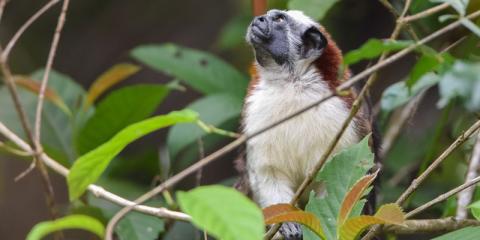
Breakfast at the hotel followed by a program orientation. Start the day by exploring a tropical dry forest in the center of Panama City, the Metropolitan Natural Park. Perhaps the only forest reserve within a major capital city in Latin America, it boasts a rich variety of birds, mammals, amphibians, and reptiles; it also affords visitors the chance to see Geoffroy's Tamarin. Take an easy walk to an overlook for a sweeping perspective of Panama City. Enjoy lunch at El Trapiche, a restaurant in the neighborhood of San Francisco. Then, visit the mudflats in Costa del Este, an area part of the Panama Bay expansion that boasts critical mangrove forests. The Panama Bay Mudflats are a designated wetland of international importance or Ramsar site, as well as a site of hemispheric importance by the Western Hemisphere Shorebird Reserve Network (WHSRN). The Bay of Panama is an important wintering habitat to thousands of shorebirds including Western Sandpiper, Semipalmated and Black-bellied Plovers, Willet, Whimbrel, and Short-billed Dowitcher. Later in the day, attend a lecture at the Audubon Society to gain insights into the region's rich biodiversity and conservation efforts. Have dinner al fresco in the Albrook area.
Breakfast-Lunch-Dinner included
Crowne Plaza Panama
Torti
Today, check out from the hotel and depart Panama City toward the East of the country to visit the stunning mountains of Cerro Azul, nestled on the border of Chagres National Park. Journey through a coniferous forest with altitudes ranging from 262 to 1,180 feet above sea level. This region is home to diverse flora and fauna, including 225 bird species. Keep an eye out for the endemic Violet-capped Hummingbird and the regional endemic Speckled Tanager. Other possible sightings include the Rufous-winged Tanager, Blue Cotinga, and the endemic Stripe-cheeked Woodpecker. Have some lunch before visiting Bayano Lake, Panama's second-largest body of water and a renowned birding hotspot. Arrive at Hotel Portal Avicar and check in before enjoying dinner and overnight.
Breakfast-Lunch-Dinner included
Hotel Portal Avicar
Torti
Start the day with breakfast at the hotel before embarking on the journey to San Francisco Reserve. This natural reserve boasts a remarkable bird list of more than 400 species. Spread across more than 700 acres, San Francisco offers visitors breathtaking landscapes, from expansive plains to seemingly endless lines of trees, and elevations of more than 950 feet above sea level. Keep alert for potential sightings of the regional endemic Crimson-bellied Woodpecker, Spot-breasted Woodpecker, Rufous- margined Antwren, White-eared Conebill, Bare-crowned Antbird, and Black Antshrike. Have lunch at a local spot before enjoying more birding time along the Tortí River.
Breakfast-Lunch-Dinner included
Hotel Portal Avicar
Meteti
Depart Torti to Boca de Lara to visit a Wounam village to learn about culture, traditions, religion, botanic, and their connection with nature. Have lunch of the traditional meal of the Village, based on fish, plantains, and fruits. Later visit Meteti road for birding. Overnight at Hotel Bellagio Meteti.
Breakfast-Lunch-Dinner included
Hotel Bellagio Meteti
Meteti
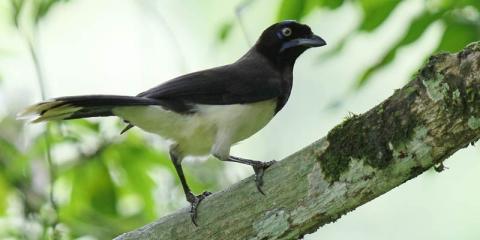
Explore a private farm along the Chucunaque River, where there are excellent birding opportunities, as well as a chance to learn about the region's conservation efforts dedicated to rescuing Jaguars. The largest population of jaguars in Panama inhabits this area of the Mesoamerican Biological Corridor, which connects high biodiversity regions of Central and South America. Enjoy lunch at the farm before continuing the adventure toward El Salto Road and the Yaviza wetland, both great hotspots for birding. Explore the diverse ecosystems and witness the rich avian life that inhabits these areas, which feature more than 345 species. Be on the lookout for birds like the Black-chested Jay, Whooping Motmot, Black Oropendola, Red-crowned Woodpecker, and Black-crowned Antpitta.
Breakfast-Lunch-Dinner included
Hotel Bellagio Meteti
Meteti
Begin the day with breakfast before embarking on a boat ride to visit a community that is home to a Harpy Eagle nest. Cruise through scenic waterways before setting out on a 45-minute walk over level terrain to reach the Harpy Eagle nest. It may take patience and good luck to see the Harpy Eagles, especially if they are away from the nest hunting, but the area provides plenty of opportunities for wildlife observation. Some of the other bird species that inhabit the area are the Red-throated Caracara, Golden-headed Manakin, and Cinnamon Becard.
Breakfast-Lunch-Dinner included
Hotel Bellagio Meteti
Gamboa
Have some breakfast, and then visit the hydrological and natural reserve of Filo del Tallo. This reserve protects a critical natural area in the Darién Province from threats of deforestation and degradation and is a haven for bird enthusiasts, offering sightings of diverse species such as the Pied Puffbird, Crimson-backed Tanager, and Brown-hooded Parrot. After a morning of birding and some lunch, travel from Metetí to Gamboa. The journey includes plenty of opportunities for birding stops and breaks along the way. Arrive to Hotel Gamboa Resort for overnight.
Breakfast-Lunch-Dinner included
Gamboa Rainforest Resort
Gamboa
Today, visit the Rainforest Discovery Center, located at the world-famous Pipeline Road, where 385 bird species were identified during a bird count organized by the Audubon Society in 1985 that established a record for the most species of birds seen within 24 hours. Begin at the visitor center, observing up to 14 species of hummingbirds that have been recorded at the feeders. Continue walking along the trails to observe birds of the undergrowth, such as manakins and trogons. Ascend the 130-foot tower to observe birds in the canopy layer such as the Mealy and Red-lored Parrots, Keel-billed and Yellow-throated Toucans, Blue Cotinga, Masked Tityra, and Green and Red-legged Honeycreepers. Enjoy lunch at Don Caimán, a restaurant in the Gamboa Marina overlooking the Chagres River, before visiting the Sloth Sanctuary. Learn about wildlife rescue and rehabilitation, their work to transition injured animals back into the wild, animal relocation during canal expansion, and meet their animal ambassadors. Later, take a leisurely walk along the street that runs through the exhibitions and leads to the lower station of Gamboa's Aerial Tram.
Breakfast-Lunch-Dinner included
Gamboa Rainforest Resort
Gamboa
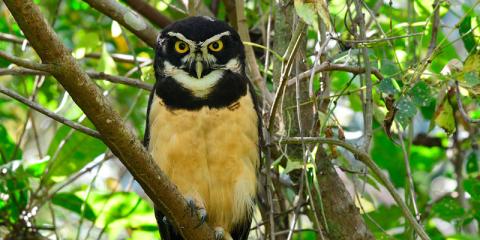
Today, visit Plantation Trail and Summit Ponds in Soberanía National Park. Created in 1980, Soberanía National Park stands as one of Panama's natural jewels and is one of the country's most accessible tropical rainforests. As a great birding hotspot, it affords visitors the chance to spot species like the Boat-billed Heron, Greater Ani, Spectacled Owl, Bat Falcon, Rosy Thrush-Tanager, Golden-fronted Greenlet, Blue Cotinga, and Green Shrike-Vireo. Next, head to the Miraflores Visitor Center to witness the engineering prowess of the Panama Canal locks at work and enjoy the museum's interactive displays. Later in the day, explore the historic district of Casco Viejo, or Casco Antiguo, built in 1671 after the destruction of Panamá Viejo by the English privateer Henry Morgan. Casco Viejo's parks and narrow streets are lined with colorful buildings representative of Spanish, French, and early American architectural styles. This eclectic collection of architectural styles reflects the city's role as an international trade center and multicultural metropolis long before the building of the canal. Enjoy a farewell dinner in Casco Antiguo to celebrate the captivating landscapes and vibrant culture of Panama.
Breakfast-Lunch-Dinner included
Gamboa Rainforest Resort
Farewell
Travel to Tocumen International Airport for your flight(s) home. Check out at 12 pm.
Breakfast- included
Land Cost

$3,565

Per person

About this price

Land cost only. Does not include round-trip airfare to and from destination.

Single room supplement $540

What's Included
  • Activities and meals as mentioned in itinerary
  • Full time expert birding naturalist guide for duration of program
  • Private transportation and driver for the duration of the program
  • Arrival and departure transfers based on individual flight schedules
  • Non alcoholic beverage with meals
  • Bottled water or water refill station during transfers
  • Carbon Offset
What's Not Included
  • International airfare
  • Tips
  • Travel Insurance
  • Items of personal nature
Pricing Details
Cost is based on a minimum of 8 participants in double occupancy.

Full payment of $3565 is due to hold space on this trip. This payment is not refundable; 100% cancellation fee.

Holbrook Travel strongly recommends the purchase of travel protection for medical emergencies while traveling and to protect your investment. Please note the purchase of Cancel for Any Reason Coverage or to exclude pre-existing conditions with Trip Cancellation coverage may require policy purchase within 10-14 days of your initial deposit, depending upon the provider.

Single room supplement $540


Final payment due date: November 14, 2024

Travel Info

Print Travel Info

Entry & Exit Requirements

U.S. citizens must have a valid passport to enter Panama. Passports must be valid for at least three months after the date of entry.

A visa is not re­quired for visits up to 180 days.

If you are not traveling with a U.S. passport, please check with the Panamanian Embassy for the requirements based on your nationality.

U.S. citizens entering Panama by commercial flight may be charged a $5 tourist fee if Holbrook does not make your air reservations.

Health Information

IMMUNIZATIONS

The Centers for Disease Control recommends that all travelers be up to date on routine vaccinations such as measles-mumps-rubella (MMR) vaccine, diphtheria-pertussis-tetanus vaccine, varicella (chicken pox) vaccine, and your yearly flu shot before every trip.

There are no vaccinations required for entry into Panama unless you are arriving from a country where yellow fever transmission is a risk.

Yellow fever is a risk in certain parts of Panama, primarily east of the area surrounding the Panama Canal. The CDC recommends the yellow fever vaccine if you are traveling to these areas. Consult your physician for more information.

Though not required, the CDC recommends inoculation against hepatitis A, hepatitis B, and typhoid for most unvaccinated travelers to Panama.

Please consult your physician for additional information and recommendations based on your individual circumstances.

MALARIA

The CDC warns that travelers to certain areas of Panama may be at risk for exposure to malaria. Malaria is caused by a parasite found in Anopheles mosquitos, which are active from dusk until dawn. There is no vaccine to protect against malaria. If you are visiting areas where malaria is present and choose to use an anti-malarial drug, as recommended by the CDC, see your doctor for a prescription. To protect against mosquitos, cover exposed skin with lightweight, long-sleeved shirts and pants, consider treating clothes with permethrin, and use an insect repellent containing an active ingredient like DEET or picaridin.

DENGUE FEVER & OTHER INSECT-BORNE ILLNESSES

Locally transmitted cases of dengue fever have been reported in Panama. Local transmission means that mosquitoes in the area have been infected with dengue and are spreading it to people. In addition, locally transmitted cases of Zika virus, leishmaniasis, and other insect-borne illnesses have previously been reported in Panama.

The CDC recommends that travelers to Panama protect themselves against insect bites. As a precaution, the CDC advises women who are pregnant to consider postponing travel to any area where Zika virus transmission is ongoing.

SUN EXPOSURE

The effects of the sun can be damaging to the eyes and skin. Spending time outdoors exposes you to the sun’s harmful ultraviolet (UV) rays, even on cloudy days. To protect yourself from the sun, use a broad spectrum sunscreen of at least SPF 15, protect skin with clothing, wear a wide-brimmed hat and sunglasses, and drink plenty of fluids.

Respiratory Illness Protocols

Please review our Respiratory Illness Protocols page, which explains our policy and procedures if you or another traveler should develop symptoms of a respiratory illness during your trip. Your participation in a Holbrook Travel program indicates that you are in agreement with these protocols.

Resources

Print Resources

Suggested Packing List

Everyone has personal preferences when it comes to packing; for this reason, the information below is offered as a general guide and not a definitive list. You know yourself best: Use your discretion and pack what you think will serve you, based on your personal preferences and specific itinerary. You may find many of these items in our Gear Store.

CLOTHING

Casual, comfortable clothing is suitable for most activities. You may wish to bring a slightly nicer outfit or two (eg sundress, polo shirt) if your itinerary includes dinners out or more formal activities. Bring enough clothing suitable for the length of your program. If you prefer to pack light, note that many hotels offer laundry services at additional cost. If you plan to hand-wash items, remember that humidity may delay drying time. Pack clothing that can be worn in layers to adapt to weather changes throughout the day. Clothing that wicks away moisture and dries quickly is recommended.

  • A combination of short-sleeved and lightweight, long-sleeved shirts for sun and mosquito protection
  • Shorts
  • Lightweight, quick-drying long pants for sun and mosquito protection; jeans tend to be uncomfortable in hot and humid conditions, but are fine in the cooler highlands.
  • Undergarments
  • Sleepwear
  • Lightweight jacket or sweater/sweatshirt (or heavier weight if visiting high-elevation areas)
  • 1-2 bathing suit(s) for the beach, if applicable, plus many hotels have pools
  • Socks – Bring extra pairs. If your itinerary indicates muddy hikes with rubber boots provided on-site, pack a few pairs of knee socks to prevent blisters.
  • Shoes – Consider your specific itinerary when choosing footwear. For most programs, you’ll likely want at least one pair of comfortable, closed-toe walking or hiking shoes suitable for forest hikes and walking over cobblestones or other uneven terrain. Sturdier hiking boots may be appropriate for more rugged itineraries. In addition, many participants opt for a pair of sturdy sport-strap sandals (e.g. Keens, Tevas, or similar) and/or casual flip-flops or sandals. If you’re whitewater rafting or visiting the beach, you may also want a pair of aqua socks, reef walkers, or water shoes.
  • Lightweight rain jacket, hooded poncho, and/or windbreaker
  • Visor or wide-brimmed sun hat
  • Bandana, scarf, or Buff-style headwear

MISCELLANEOUS

Remember to pack valuables such as your passport, cash/credit cards, and medications in your carry-on luggage.

  • Personal toiletries
  • Passport and photocopies of all travel documentation
  • Personal insurance card and travel insurance information
  • Money – ATM/credit card, traveler's checks, and/or cash; small bills in good condition are recommended
  • Prescription medicines (if applicable), with a copy of the prescription
  • Yellow fever certificate (if required; only if arriving from a country where yellow fever transmission is a risk)
  • Sunglasses with strap
  • Small day pack for hikes and excursions
  • Flashlight and/or head lamp
  • Travel alarm clock or inexpensive waterproof wristwatch with alarm – Not all hotels provide alarm clocks.
  • A pocket calculator or phone to assist with conversions and currency exchange
  • Binoculars with lens cleaner
  • Camera and related equipment, such as charger, lenses, and extra memory cards
  • Reusable water bottle
  • Non-perishable snacks
  • Pocket-knife or multipurpose tool - Pack in your checked luggage
  • Zip-top style bags – useful for packing toiletries, sorting clothing, storing damp or muddy shoes, or as a dry bag for protecting electronics
  • Notepad or travel journal and pen
  • Music or reading material for down time, long bus drives, or on the airplane, and a portable bright light to read by
  • Collapsible walking stick with rubber tip
  • A small quantity of laundry detergent if you’ll be washing clothing by hand
  • Travel-size umbrella – Some people find this unwieldy to carry, while others find it offers better protection than a rain jacket alone.
  • Money belt
  • Chargers for electronics

In addition to your personal toiletries, it is useful to pack a small medical kit, which you can easily prepare. Helpful items might include: bandages, antihistamine, a pain reliever, motion sickness and/or altitude sickness medication (if you are prone to either), anti-diarrhea medicine, individually wrapped pre-moistened towelettes and/or hand sanitizer, antibiotic ointment, anti-fungal cream, moleskin for blisters, eye drops, tweezers, a mini sewing kit, and an extra pair of disposable contact lenses or eyeglasses if you wear them.

This was one of the most enjoyable trips I have ever been on.
- Candace G.
Panama , 2018
Want to subscribe to the Holbrook Explorer?
Sign up for our newsletter and get the latest updates on upcoming trips, deals, and more.
CAPTCHA
This question is for testing whether or not you are a human visitor and to prevent automated spam submissions.
eBird for Beginners
There are two special celebratory birding events every year, Global Big Day and the Christmas Bird Count, that were started by Audubon Society and the Cornell Lab of Ornithology to invite everyone fro