Guest post by Jerry Wayne Davis
I had not heard of a Parrot Lick until I started putting together a birding trip for March of 2026. We had a successful trip to Ecuador in 2024, which included birding the Chocó-Andes Region: Western and Eastern Slopes, but the 2026 trip was to bird the Eastern Slopes and Amazon Rainforest. The Amazon rainforest was a diverse new element in the itinerary.
I scheduled spending four days at the Sacha Lodge. The name Sacha is an ancient native word that means jungle. The itinerary was for March 29, 2026 to start the day with a visit to the 2.5-million acre Yasuní National Park and its Parrot Licks to learn about the life and habits of the local parrot population. The parrot lick is an exposed clay bank where several species, including the Blue-headed Parrot, Cobalt-winged Parakeet, Dusky-headed Parakeet, and the Yellow-crowned Amazon, might be seen when the weather conditions are sunny and dry.
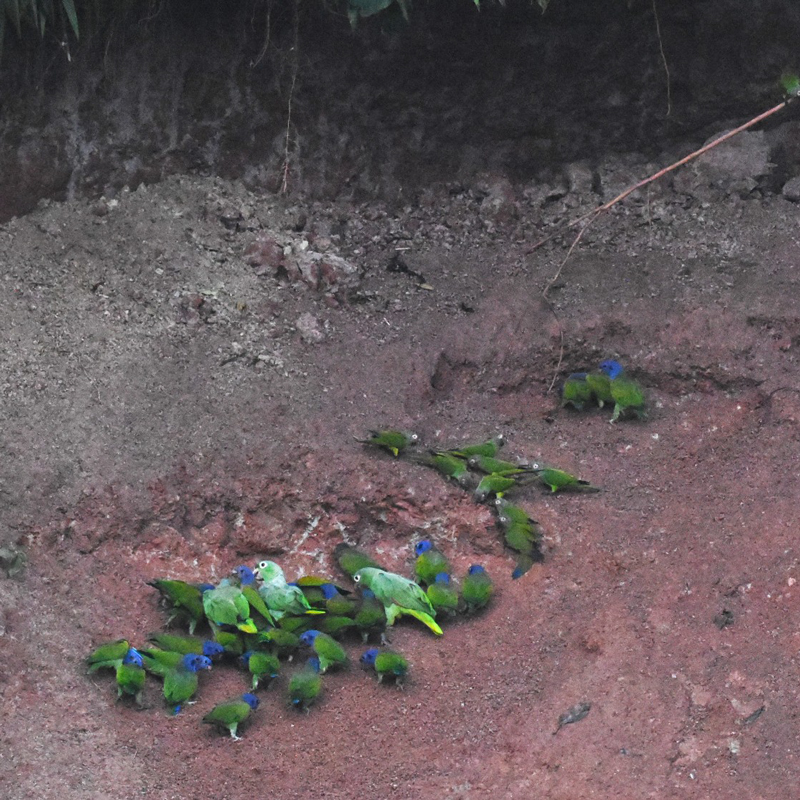
Napo River Parrot Clay Lick. March 29, 2026; photo by Jerry Wayne Davis
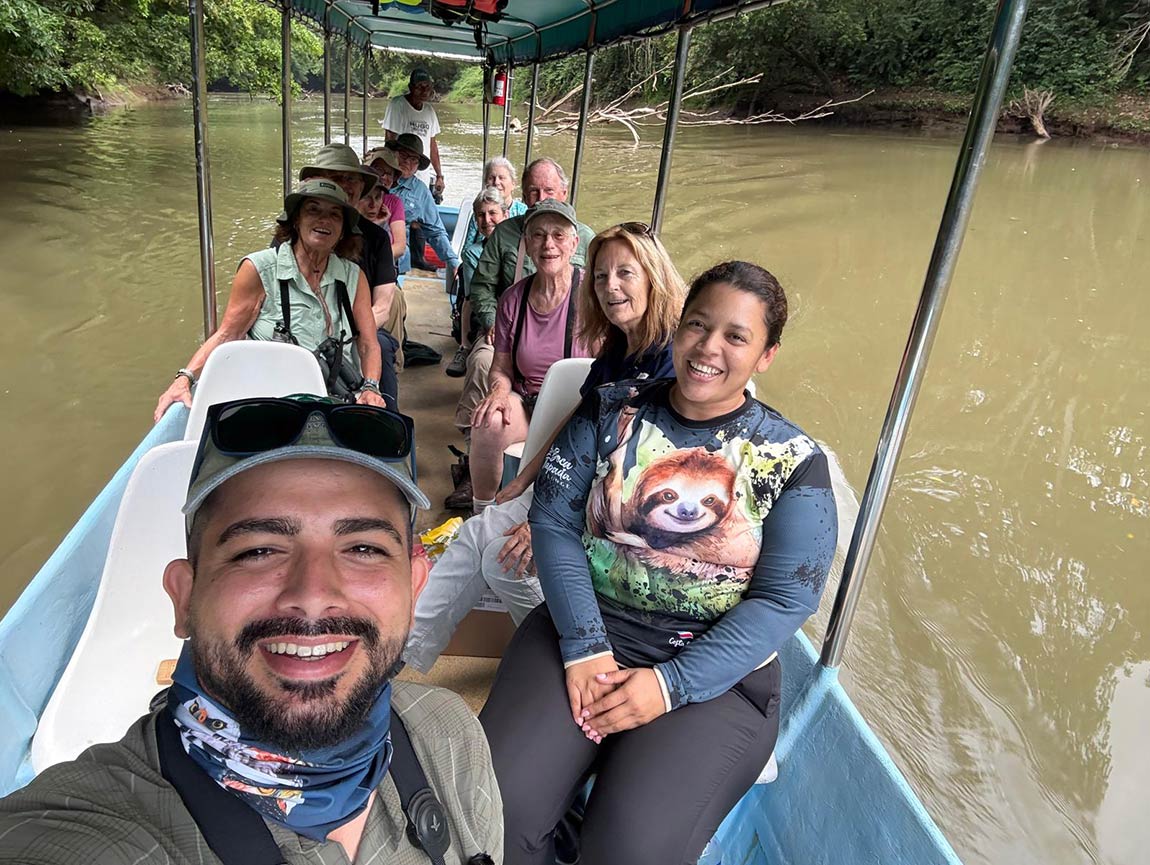
We started the day as usual, up at 4 am, breakfast at 5am, and at 5:30 am we got into our small canoes, crossing Lake Pilchicocha, then a mile portage to the Napo River. At the river, we boarded a bigger open boat to travel the Napo River to the Park and parrot licks.
The clay licks have been used by parrots and other species for millions of years and are critical sites where parrots, macaws, and other wildlife gather to consume mineral-rich clay that helps them detoxify and obtain important nutrients such as sodium, potassium, and magnesium, which are essential to the birds' health. Parrots with a diet high in fruits can be low in minerals, and clay licks supplement their diets. The clay helps to neutralize the toxins found in fruits and seeds, binding with these toxins to prevent absorption in the gastrointestinal tract. It also provides additional sodium missing in their diet critical in physiological functions like nerve impulses and heart activity.
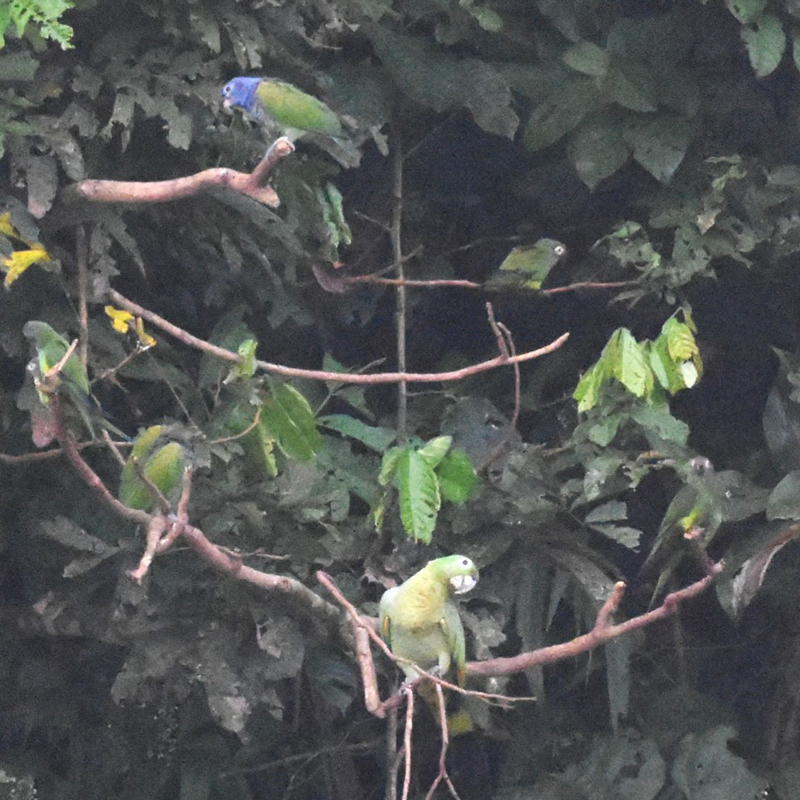
Napo River Parrot Clay Lick. March 29, 2026; photo by Jerry Wayne Davis
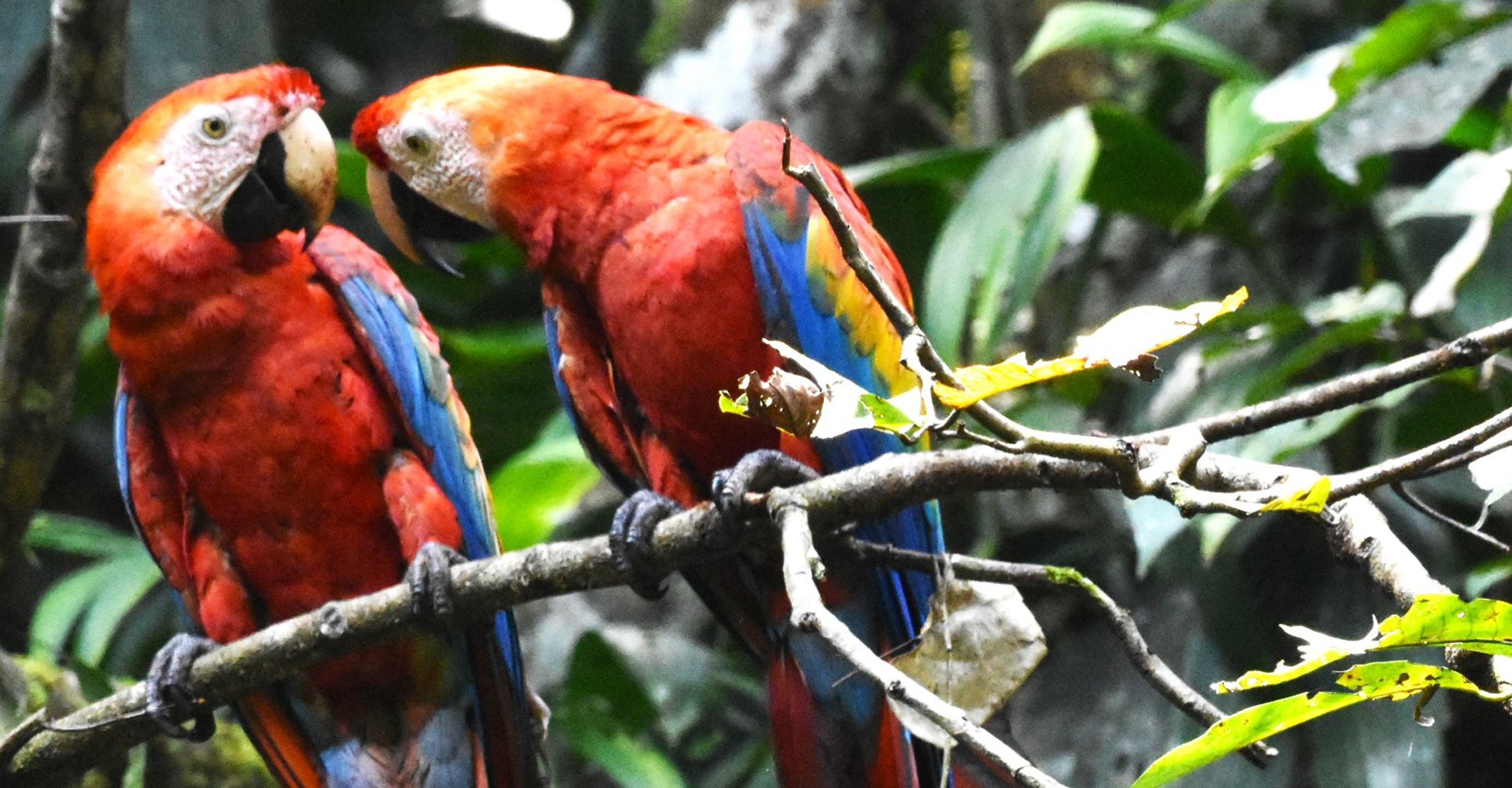
After the river clay lick observations, we continued up river and went ashore for a hike to the Napo River Wildlife Parrot Lick observation center. Here, we waited in their hide to sit and watch the parrots come in for mineral water and clay. Dozens of Cobalt-winged Parakeets chattered overhead and eventually the Scarlet Macaws perched in trees in front of the hide waiting to come down. A family of Colombian Red Howler Monkeys came in to also access the mineral water and clay. This created a wait and see standoff between the Scarlet Macaws and the Howler Monkeys. We sat for several hours in anticipation of seeing the parrots come down, but to no avail. The Scarlet Macaws stayed perched in the trees above, and the family of Howler Monkeys waited. Eventually, our guide Oscar suggested that we needed to leave since they were not responding. The park ranger said that once we left, the Howler Monkeys came down immediately.
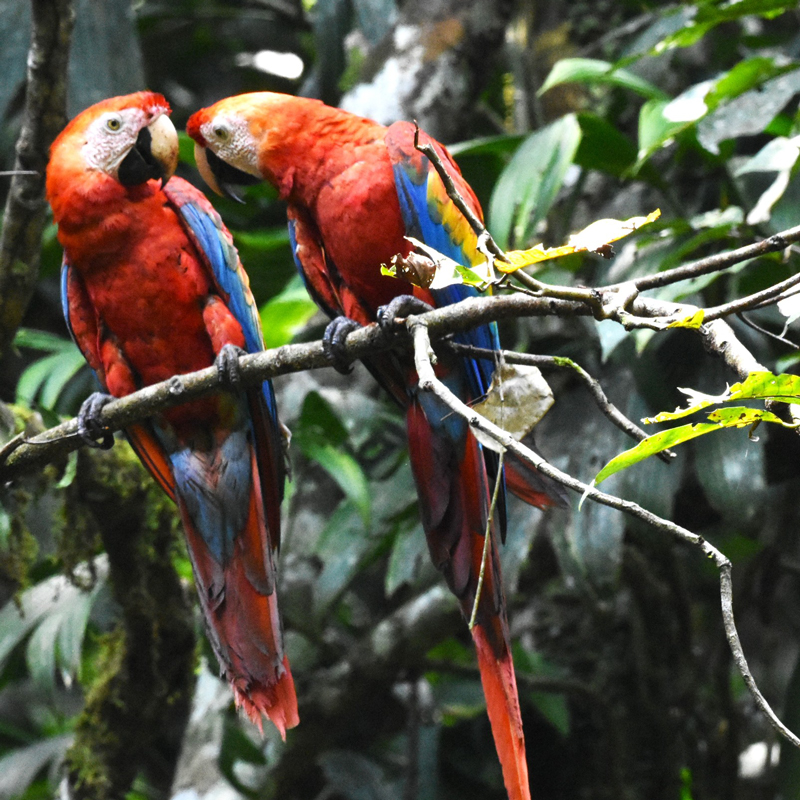
Scarlet Macaw waiting to come to the clay lick and mineral water at the Napo River Wildlife Center. March 29, 2026; photo by Jerry Wayne Davis
This provided us with ecological insight between wildlife and nature that had been going on for millions of years. One can only marvel at this medicinal relationship between birds, monkeys, other wildlife, plants, and minerals and their connective benefits and how they gain insight and where to find them, came to be.
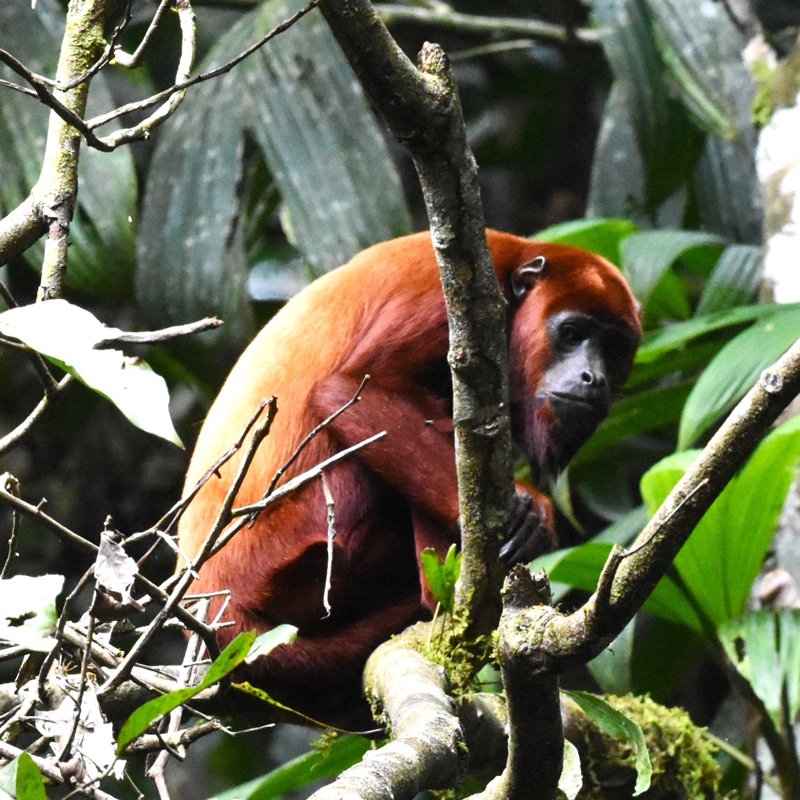
Colombian Red Howler Monkey waiting to access the Parrot Lick and mineral water. March 29, 2026; photo by Jerry Wayne Davis