New Zealand | Wildlife and Ecosystems with College of DuPage
Date:
Jan 24 - Feb 9, 2025
Duration:
17 Days
Interests:
Join Waitlist This departure is SOLD OUT Print Itinerary

Course Description

Penguins, whales, glow worms, ancient redwood forests, evergreen rainforests, steaming volcanoes, geysers, glacial fjords, windswept coastal cliffs, and soaring snow-covered mountain ranges make New Zealand one of the most ecologically diverse countries on earth. Journey through the North and South Islands, including Auckland, the "City of Sails", Sanctuary Mountain in Mangalamurti, Waitomo's glow worm caves, Rotorua for a Kiwi encounter, Cambridge to observe master pounamu carvers, Franz Josef and Wanaka for ventures into glacier country and Queenstown. Activities include a walking excursion up to two miles over diverse terrain, an alpine Great Train Ride, a catamaran excursion to explore krill-rich waters and look for whales, an overnight cruise in Milford Sound in Fiordlands National Park, an Interislander ferry ride, a night walk to see the endemic tuatara, easy kayaking, a walk among the treetops on the canopy walkway, exploring the Māori culture in the geothermal wonderland of Rotorua, and more. We will get to know New Zealand's endemic plant and animal life - plus the conservation efforts to protect them and how these islands use their natural resources as their power source.

Instructor: Kathleen Luczynski
For course/trip information, email: luczynsk@cod.edu

Course:

Register for BIOLO-2025SP 1205-S053
Spring 2025, 2 credit hours at inside.cod.edu
Field Studies/Study Abroad Office 630-942-2356 or fssa@cod.edu

Class Information:

November 20, January 8 and February 19 from 6:30 pm to 8:50 pm

Field Study:

January 24 (Friday) 2025 to February 9 (Sunday) 2025

Passport and Electronic Travel Authorization required.

Field Study Highlights

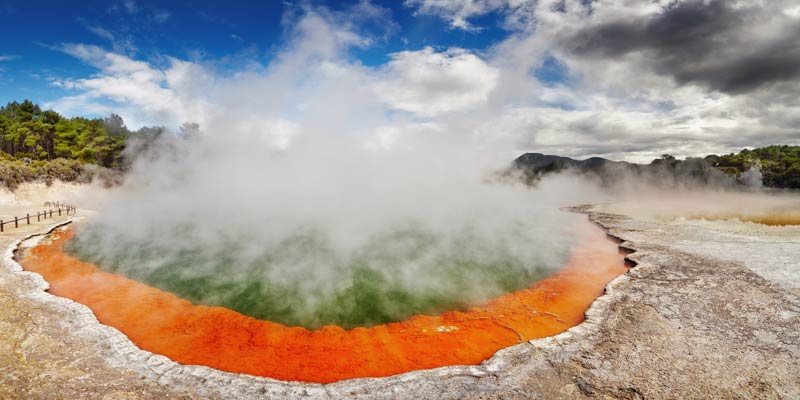
  • Experience geological wonders up close with a visit to the Te Puia geothermal valley.
  • Cross the South Island coast-to-coast on one of the world’s best and most scenic train journeys.
  • Discover unique and endemic animal and plant species that inhabit the islands' diverse ecosystems.
  • Kayak the gentle waters of the Ōkārito Lagoon amid the dramatic scenery of the Southern Alps.
  • Embark on easy hikes through native forest, along rocky coastline, and over the river bed leading to Franz Josef Glacier.
  • Revel in the mirror-like beauty of Milford Sound in Fiordlands National Park on an overnight cruise.
  • Receive daily instruction and participate in daily reflections led by College of DuPage instructor Kathleen Luczynski.

Meet Your Leader

Kathleen Luczynski

Kathleen Luczynski has a passion for educational travel with a focus on tours that expose secrets in nature. Animal watching and an interest in plant natural histories led her to develop soft-adventure trip courses for the College of DuPage. In addition to field-based courses she has developed four teacher education courses for Benedictine University, tutors local high school students, and supports a non-profit organization called SCARCE (School and Community Assistance for Recycling and Composting Education). A high school biology teacher for 34 years, Kathleen has shared teaching strategies at various science teacher conventions and has helped write programs such as The Leopold Project, Project Aquatic, and a reading strategy book. She has received a number of awards and grants from her high school district in Downers Grove, IL and now creates travel journals for her College of DuPage course trips.

What makes us different

Wildlife up-close

Enjoy up-close observation of the behaviors and interactions of wildlife in their native habitats

Service anytime

Enjoy worry-free travel — our emergency line is monitored 24/7/365 so we can assist you if any problems arise while you’re traveling with us

Cultural immersion

Immerse yourself in local traditions and beliefs through authentic hands-on experiences

Value for your money

We offer the highest quality educational content in the world of academic travel

Support local communities

We work with local guides and organizations so your trip includes authentic cultural experiences while supporting the economy of the region

Flight arrangements

We’re a full service travel provider and are happy to assist with making your flight arrangements if desired

Daily Itinerary

Print Itinerary
Depart US
Depart the United States today.
In Flight
During the overnight flight, cross the International Date Line. On this journey to New Zealand, you "lose" a day, which you "gain" back upon returning home.
Auckland
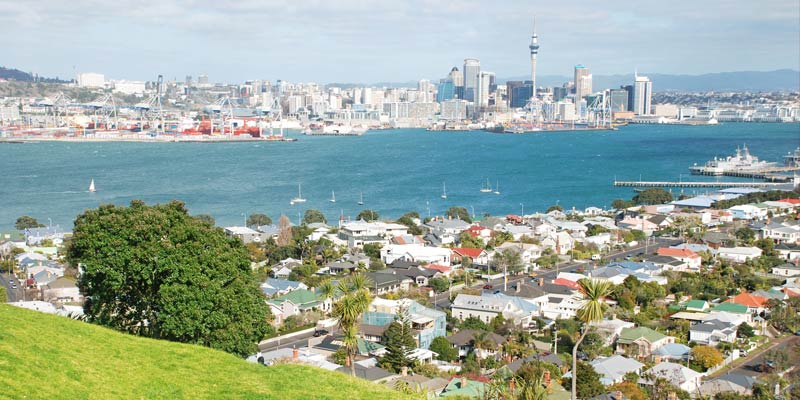
Upon arrival at the Auckland International Airport on New Zealand's North Island, after clearing customs and collecting your luggage, you will be taken to your hotel by a local representative. Early check-in has been arranged for your comfort. Spend the day relaxing or exploring Auckland, the "City of Sails" and New Zealand's most populous city, before joining your fellow travelers in the evening for a welcome orientation and dinner at the hotel.
Dinner included
Heritage Hotel
Auckland
Explore Tikapa Moana - the Hauraki Gulf onboard our purpose-built wildlife viewing vessel. Cruise through the islands and spot the diverse marine life that calls this marine park home including whales, dolphins, seals, penguins and more. Listen to the stories of the original inhabitants and Iwi of Auckland and the Hauraki Gulf, Ngai Tai ki Tamaki, as you pass local landmarks and sites of significance. As part of your cruise you can discover one of our island destinations with your choice of island stop at Rotoroa Island or Man O' War, Waiheke Island - take the opportunity to stretch your legs, swim in a sheltered bay and discover wine or wildlife.
Breakfast-Lunch- included
Heritage Hotel
Auckland
After a sumptuous buffet breakfast, head out on a tour of Auckland, the country's largest metro area. Resting between the Pacific Ocean and the Tasman Sea, this urban paradise is a playground for both city and nature lovers. Marvel at fantastic views over its harbor, extinct volcanoes, and its beautiful gardens and parks. Later, visit Auckland Museum to learn about the rich cultural and natural history of New Zealand and its people. In the afternoon, travel to Muriwai, one of the black-sand surf beaches on Auckland's rugged west coast. Muriwai is home to a breeding colony of sea birds known as Takapu or Australasian Gannet and its lookout point offers incredible views toward the Kaipara Harbour. During the walk to the Takapu colony, it is possible to observe several native plants and trees that hold great significance in Maori culture. This evening, enjoy dinner at Orbit 360° Dining, a restaurant at the top of the Sky Tower with a commanding 360-degree view of Auckland and the natural beauty of the surrounding area.
Breakfast-Dinner included
Heritage Hotel
Cambridge
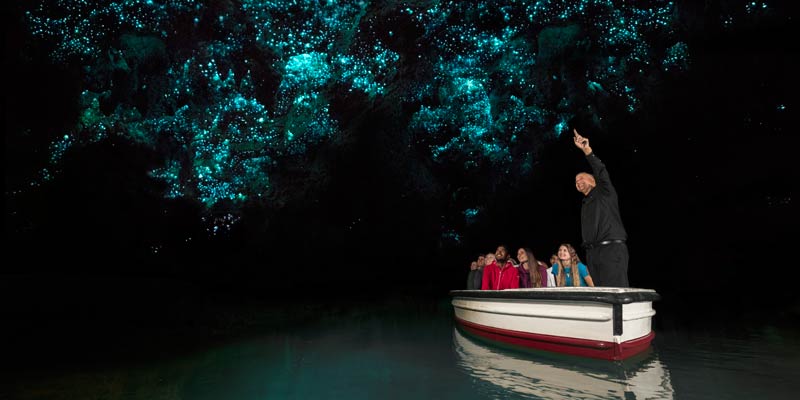
After breakfast, depart south into the Waikato heartland of the North Island. On the way toward Cambridge, pass through a variety of scenery, from pastoral farmland to the open, flat Hauraki Plains. En route, stop at Waitomo to see the stunning glowworm caves. Walk through the Spellbound cave to learn more about the geological significance of the area, and witness the bioluminescent glowworms, which make the cave ceiling look like a brilliantly lit night sky. Continue to the town of Cambridge, New Zealand's equine capital, known also as "The Town of Trees & Champions." Explore the tree-lined streets of this quaint community located on the banks of the powerful Waikato River.
Breakfast-Dinner included
Hidden Lake Hotel
Rotorua
Today, explore Sanctuary Mountain Maungatautari. This 8,400-acre, predator-proof conservation project in this protected natural area aims to continue the reintroduction of threatened and endangered species via breeding programs and gives visitors the opportunity to see some of New Zealand's most incredible animals in a sound ecological environment. Stop for a picnic lunch in the native forest of the southern enclosure and try to spot birds like the North Island Kaka, South Island Takahe, Stitchbird or Hihi, Tui, New Zealand Bellbird or Korimako, and North Island Kokako, all of which are threatened or endangered and found only in New Zealand. Other wildlife that can be found at Sanctuary Mountain includes the Mahoenui giant weta, an endemic flightless insect, reptiles like geckos and tuataras, the koura, a freshwater crayfish, and New Zealand long-tailed bats. Then, travel to the geothermal capital of New Zealand, Rotorua. Peppered with natural hot springs, boiling mud pools, and steaming geysers, Rotorua sits within one of the world's most active volcanic regions. In addition to its geothermal landmarks, the city also has a rich Indigenous history and is home to several prominent Maori communities. The first stop is at Whakarewarea Forest, also known as The Redwoods, for the award-winning Treewalk(TM). This forest of naturalized coastal redwood trees is located adjacent to Whakarewarewa, the geothermal area that was the site of the Maori fortress of Te Puia, where the Maori have lived for centuries. Venture into an unforgettable walk on the network of eco-suspended bridges and platforms intricately designed to honor and accentuate the stunning natural environment. With the height of the walkways ranging between 30 and 60 feet, bask in the unique birds' eye perspective of the forest below and the treetops above.
Breakfast-Lunch-Dinner included
Millennium Hotel
Rotorua
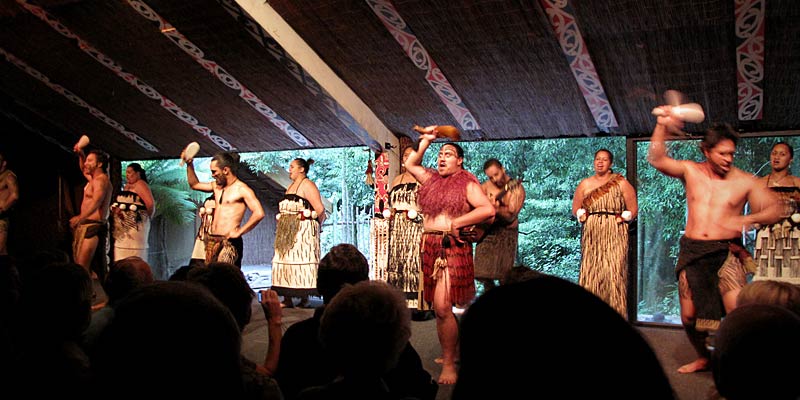
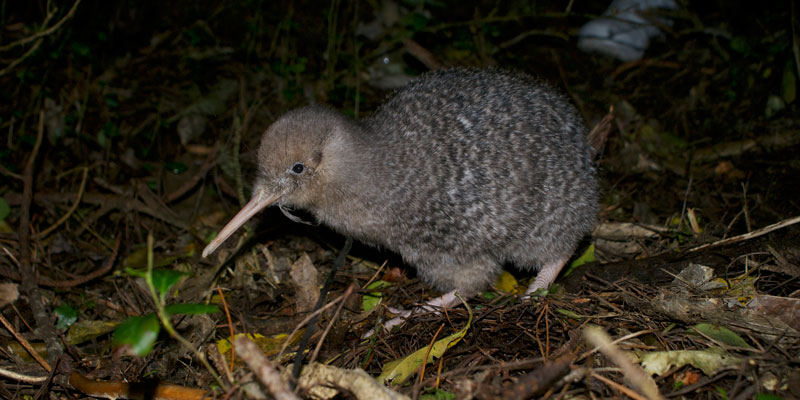
This morning, visit the National Kiwi Hatchery to learn about New Zealand's renowned Kiwi conservation program while touring the hatchery, which has successfully hatched over 2,100 kiwi chicks. Then, visit the Agrodome right next door to enjoy a farm show and learn about sheep and their importance to New Zealand's economy. Travel back to the city to visit Mountain Jade, a jade-carving studio where visitors can observe revered New Zealand artists and master carvers working with pounamu to create beautiful jewelry and art. Jade, called "greenstone," or pounamu in Maori, is found in abundance on the west coast and treasured by the Ngai Tahu, the principal Maori community of the South Island. Later, explore Te Puia to view its bubbling mud pools, gushing geysers, and colorful hot springs before the start of an insightful and meaningful Maori cultural evening. Receive a traditional Maori welcome, followed by a wonderful performance that showcases Maori stories of long ago, and take part in the ceremony. After, enjoy dinner cooked in an earth oven, a unique and tasty experience.
Breakfast-Dinner included
Millennium Hotel
Wellington
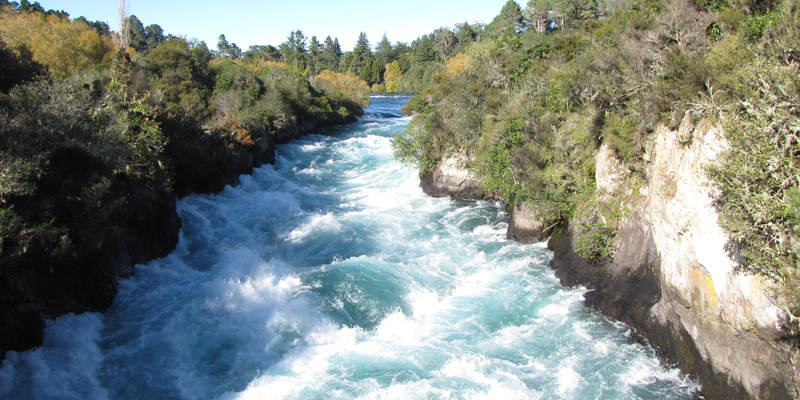
The mighty and spiritually significant Waikato, New Zealand's longest river, has eight hydroelectric power stations ranging across its full length on the North Island. For the first stop of today, witness the opening of Aratiatia, one of these eight hydroelectric power stations, where visitors can also enjoy its river rapids as they once were prior to the dam being built. Then, visit the iconic Huka Falls to witness the phenomenon of natural hydro power, with more than 58,000 gallons of water per second barreling down a 36-foot high waterfall. Travel down the North Island on Desert Road, a section of State Highway 1 in Te Onetapu, commonly known as the Rangipo Desert, that offers one of the most scenic drives of the island, and pass the amazing active peaks of Mount Tongariro, Mount Ngauruhoe, Mount Ruapehu, and the Kaimanawa Range along the way. The drive into the country's capital city shows the astounding beauty of its harbor and surroundings.
Breakfast-Lunch-Dinner included
Copthorne Hotel
Kaikoura
Take the Interislander ferry from the North to the South Island, a voyage that has been described as one of the most beautiful ferry rides in the world. Travel through the Cook Strait to find spectacular views of the Kaikoura Ranges on the South Island. Dolphins and many sea birds are often seen as well. Enter the Marlborough Sounds, a region of bush-covered mountains, small islands, crystal-clear waters, and secluded bays, offering remarkable photographic opportunities. The final leg takes you through the stunning Totaranui, or Queen Charlotte Sounds, before reaching Picton, the gateway into the South Island. Upon arrival into the heart of Marlborough, New Zealand's largest wine-producing region, head to Allan Scott Winery to have a taste of the wines before enjoying a lunch of local produce. Then, travel onto the seaside town of Kaikoura. This town is famous for its marine wildlife and delicious seafood, so be sure to sample their specialties while having dinner on your own tonight.
Breakfast-Lunch- included
Sudima Hotel
Christchurch
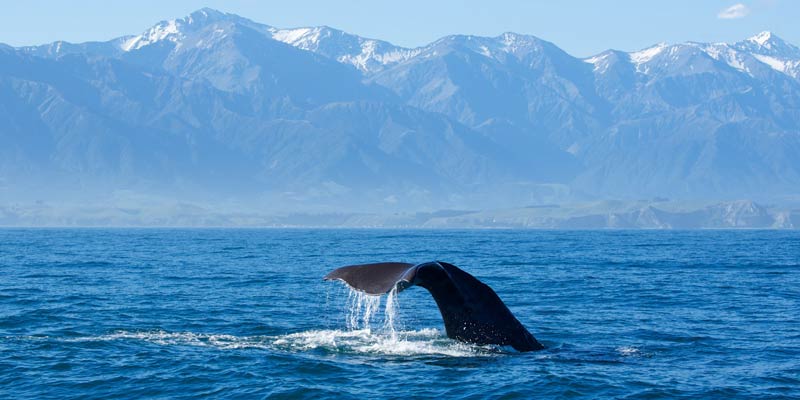
Embark on a morning excursion aboard a catamaran to explore the krill-rich waters off the coast of Kaikoura. Because of this reliable food source, there is a 95 percent success rate of seeing whales year-round here, making this one of New Zealand's most iconic wildlife-viewing opportunities. Sperm whales are common, as well as humpback, blue, minke, southern right, and beaked whales. There may also be chances to observe albatrosses, penguins, New Zealand fur seals, and dolphins. Back on dry land, head south to Christchurch, known as the Garden City. This afternoon, join a specialist local guide for a walking tour of Christchurch. Learn about the history and settlement of the country's oldest city, which was badly damaged by the 2011 earthquake and its aftershocks. Witness how the city has joined together to build itself up again, notably at the Cardboard Cathedral, which was erected as a temporary replacement for the city's demolished Anglican cathedral. The transitional cathedral is a symbol of hope and resilience as it was the first significant structure rebuilt in the recovery efforts. From the cathedral, take a walk through the city center toward the Christchurch Botanical Gardens to enjoy its impressive showcase of exotic and autochthonous plants and its wide variety of collections and gardens. Then, have dinner at the gardens' famous Curators House restaurant.
Breakfast-Dinner included
Fable Christchurch
Franz Josef
Wake up early this morning to board the TranzAlpine train, one of the world's great train journeys, covering 139 miles one-way and taking just under 5 hours. The train travels coast-to-coast through the 'Great Divide' and the imposing spine of mountains that partitions New Zealand's South Island. Board the train from its station on the east, in the garden city of Christchurch, toward its station on the west, in the tranquility of Lake Brunner, glacier country, and Greymouth. Along the way, passengers can marvel at scenic views of the expansive Canterbury Plains, Springfield, and Arthur's Pass, following an ancient Maori trail through the mountains of the Southern Alps that astounds the senses. That is where the Southern Alps encroach on the western coast, and numerous glaciers run off from the mountains to the ocean. After checking in at the hotel in Franz Josef, enjoy the chance to take a short walk to see some local glowworms in the evening, or just relax at your own pace.
Breakfast-Dinner included
Aspen Court Franz Josef
Franz Josef
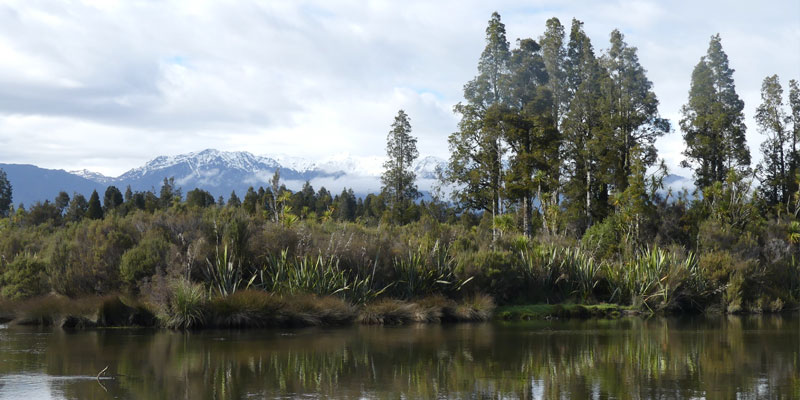
This morning, visit the tiny seaside hamlet of Okarito, home to only about 30 residents and many species of wading birds. Jump onto double kayaks and glide along the gentle waters of the Okarito Lagoon to explore its beauty and have a glimpse of some of the bird life here. Keep an eye out for the Kotuku, or Eastern Great Egret, Black Swan, Pied Oystercatcher, Royal Spoonbill, and Cormorants nesting among the dunes and reeds. Follow the estuary up the river channels deep into Kahikatea forest, all with a stunning backdrop of the Southern Alps. After a hearty lunch, hike toward Franz Josef Glacier, or Ka Roimata o Hine Hukatere in Maori, to get a closer look at the spectacle of this frozen river carving its way down from the mountaintops. Both Franz Josef Glacier and the nearby Fox Glacier are part of Te Wahipounamu, a World Heritage Site, and descend from the Southern Alps almost to sea level, making them incredibly accessible to visitors. On a gentle valley walk along the Waiho River bed to the terminal face, learn about the history of the glacier, its retreat, and the geology of glacial carving.
Breakfast-Lunch-Dinner included
Aspen Court Franz Josef
Wanaka
This morning, there is an option to participate on a guided glacier walk for anyone who is interested. Continue south along the west coast, taking note of the bent and tilting tree formations that are a result of the perpetual and powerful trade winds coming from the ocean. On the journey along this spectacular coastline, stop at different intervals to take in the dramatic views and see some waterfalls. In the afternoon, head inland to the town of Wanaka for wine tasting at a local family-owned vineyard. Enjoy the chance to sample the delicious wines of the semi-arid Central Otago region, famous for its Pinot Noir grapes. Learn from the winemakers why the climate conditions here are perfect for viticulture. There are also many restaurants and cafes to try for dinner tonight.
Breakfast- included
Wanaka Hotel
Milford Sound
Another magical day awaits to travel into Fiordland National Park to Milford Sound. Stop at Lake Te Ana-au before traveling through the Homer Tunnel, an engineering feat of its time. Your home tonight is the Milford Mariner, an overnight cruise. After settling in, cruise the length of Milford Sound, marveling at the towering cliffs, the beech trees hanging to the side of the cliffs, and the amazing wildlife. Settle into Harrison Cove, where there is time to take the tender craft to explore the coastline in search of penguins and nesting birds. Enjoy a delicious dinner, followed by a lecture from the nature guide to learn more about the local flora and fauna.
Breakfast-Lunch-Dinner included
Milford Mariner
Queenstown
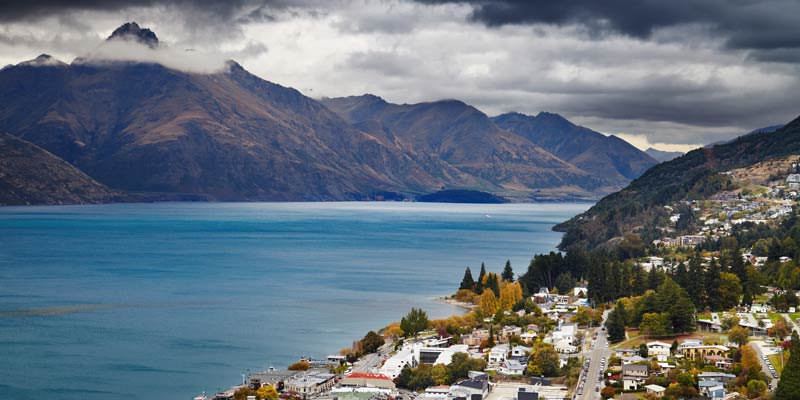
Enjoy a wonderful morning exploring another arm of Milford Sound. Then, say a fond farewell to the crew on the Mariner and have a leisurely drive back to Queenstown. After checking into your hotel, take advantage of a few hours at leisure to explore Queenstown before reconvening to take the Skyline Gondola to the top of Bob's Peak. Share a farewell dinner at the Skyline Restaurant with stunning views over Lake Wakatipu and the surrounding mountains.
Breakfast-Dinner included
Copthorne Lakeview
Depart
This morning, visit Queenstown's Kiwi Park to see New Zealand's most famous bird up close: the nocturnal Kiwi. This family-owned and operated nature sanctuary is a special home for this endemic bird and national symbol of New Zealand, as well as for some of the country's other endemic animals and plants. As part of Kiwi Park's conservation efforts, they are fully certified to provide positive animal welfare and educate visitors through interactive exhibits, guided tours, and educational programs. Get an up-close view of several native birds and reptiles during an entertaining free-flight show and see the famous Kiwi from the sanctuary's specially designed nocturnal Kiwi houses. Transfer to the Queenstown airport for your flight to Auckland and connections to international departures.
Breakfast- included
What's Included
  • Activities and meals as mentioned in itinerary
  • Full time guide for the duration of your program
  • International airfare
  • Private transportation and driver for the duration of the program
  • Arrival and departure transfers based on individual flight schedules
  • All tips
  • Non alcoholic beverage with meals
What's Not Included
  • Travel Insurance
  • Items of personal nature
  • Carbon Offset
Pricing Details
Cost is based on a minimum of 8 participants in double occupancy.

A $350 per person deposit and enrollment form is due to hold your space on this trip. This deposit is refundable 95 days prior to departure excluding a $100 cancellation fee. Cancellations after this date are not refundable.

Holbrook Travel strongly recommends the purchase of travel protection for medical emergencies while traveling and to protect your investment. Please note the purchase of Cancel for Any Reason Coverage or to exclude pre-existing conditions with Trip Cancellation coverage may require policy purchase within 10-14 days of your initial deposit, depending upon the provider.

Final payment due date: October 21, 2024

Travel Info

Print Travel Info

Entry & Exit Requirements

U.S. citizens must have a valid passport to enter New Zealand. Passports must have at least one blank page for the entry stamp and must be valid for at least 3 months after your planned date of departure from New Zealand. As this requirement is subject to change at any time without notice, we recommend at least 6 months' validity.

To enter New Zealand, U.S. citizens are required to obtain an Electronic Travel Authorization (NZeTA) prior to departure. Requesting an NZeTA costs NZD $17 through the free mobile app or NZD $23 if applying through the website. Allow up to 72 hours for processing, although many requests will be processed more quickly. To apply, you will need your passport, a credit card or debit card (Visa or MasterCard), an email address, and a photo of your face or a device that can take one. Visit https://nzeta.immigration.govt.nz for more information.

Travelers must also pay the IVL, a levy that funds tourism infrastructure and helps protect the natural environment. The IVL costs NZD $35 and is paid at the same time you request your NZeTA.

If you are not traveling with a U.S. passport, please check with the New Zealand Embassy for the requirements based on your nationality.

Health Information

Please note: Due to the fast-changing nature of travel during the COVID-19 pandemic, the information below does not reflect any current COVID travel requirements for this destination. Please visit the U.S. Department of State or CDC Travelers’ Health webpages or consult your Holbrook travel specialist for the most up-to-date requirements.

Immunizations

The Centers for Disease Control recommends that all travelers be up-to-date on routine vaccinations such as measles-mumps-rubella (MMR) vaccine, diphtheria-pertussis-tetanus vaccine, varicella (chicken pox) vaccine, and your yearly flu shot before every trip.

There are no vaccinations required for entry into New Zealand.

Though not required for entry, the CDC recommends vaccination against hepatitis A and hepatitis B for some travelers.

Please consult the CDC website and your physician for additional information and recommendations based on your individual circumstances.

Insects

The CDC advises that some insects in New Zealand may be capable of spreading disease. The CDC recommends taking normal precautions against insect bites: Cover exposed skin with lightweight, long-sleeved shirts and pants and use an insect repellent containing an active ingredient like DEET or picaridin. Apply sunscreen first, followed by the repellent (preferably 20 minutes later).

After spending time outdoors in grassy or wooded areas, the CDC recommends showering and conducting a full-body check for ticks. If you find a tick attached to your skin, safely remove it as soon as possible.

In wetter areas, particularly in Fiordland, sand flies can be pests but are not known to transmit disease and are effectively controlled by use of an insect repellent.

Sun Exposure

New Zealand's clear, unpolluted atmosphere and relatively low latitudes produce sunlight stronger than much of Europe or North America. The effects of the sun can be damaging to the eyes and skin. Spending time outdoors exposes you to the sun’s harmful ultraviolet (UV) rays, even on cloudy days. To protect yourself from the sun, use a broad spectrum sunscreen of at least SPF 15, protect skin with clothing, wear a wide-brimmed hat and sunglasses, and drink plenty of fluids.

Respiratory Illness Protocols

Please review our Respiratory Illness Protocols page, which explains our policy and procedures if you or another traveler should develop symptoms of a respiratory illness during your trip. Your participation in a Holbrook Travel program indicates that you are in agreement with these protocols.

Resources

Print Resources

Packing Recommendations

Everyone has personal preferences when it comes to packing; for this reason, the information below is offered as a general guide and not a definitive list. You know yourself best: Use your discretion and pack what you think will serve you, based on your personal preferences and specific itinerary.

You may find many of the items below in our Gear Store.

CLOTHING

Casual, comfortable clothing is suitable for most activities. You may wish to bring a slightly nicer outfit or two if your itinerary includes dinners out or more formal activities.

Remember that New Zealand is in the Southern Hemisphere, and seasons are reversed from those in the Northern Hemisphere.

Bring enough clothing suitable for the length of your program, and pack clothing that can be worn in layers to adapt to weather changes throughout the day. Weather conditions in New Zealand can change rapidly. Be prepared for cold, wet weather at any time of year. If you prefer to pack light, note that many hotels offer laundry services at additional cost or you may hand-wash items.

  • A combination of short-sleeved and lightweight, long-sleeved shirts that can be worn in layers
  • Shorts/skirts
  • A combination of light- and medium-weight pants/trousers
  • Undergarments
  • Sleepwear
  • 1-2 jackets or sweater/sweatshirts
  • 1-2 bathing suit(s) for the beach or hot springs, if applicable, plus many hotels have pools
  • Socks – Bring extra pairs.
  • Shoes – Consider your specific itinerary when choosing footwear. For most programs, you’ll likely want at least one pair of comfortable, closed-toe walking or hiking shoes suitable for forest hikes and walking over uneven terrain. Sturdier hiking boots may be appropriate for more active itineraries. In addition, many participants opt for a pair of sturdy sport-strap sandals (e.g. Keens, Tevas, or similar) and/or casual flip-flops or sandals. If you’re visiting the beach, you may also want a pair of aqua socks, reef walkers, or water shoes.
  • Lightweight rain jacket, hooded poncho, and/or windbreaker
  • Visor or wide-brimmed sun hat
  • Bandana, scarf, or neck gaiter

Personal Toiletries

Pack toiletries based on your personal preferences and habits. Below are just a few recommendations to keep in mind.

  • Shampoo, conditioner, lotion, deodorant/antiperspirant, etc. – If possible, avoid strong fragrances if you are sensitive to insect bites (and to be considerate of your fellow travelers).
  • Soap and washcloth or a small, quick-drying microfiber towel
  • Hairbrush, comb, hair ties, shower cap. Most—but not all—hotel rooms provide a hair dryer, but you may wish to bring one from home.
  • Toothbrush and toothpaste
  • Razor
  • Ear plugs, especially if you are a light sleeper
  • Personal hygiene products
  • Insect repellent with an active ingredient like DEET or picaridin
  • Sunscreen and lip balm with SPF – If you’ll be in the ocean, we recommend reef-safe sunscreen.
  • A travel pack of tissues

In addition to your personal toiletries, it is useful to pack a small medical kit, which you can easily prepare. Helpful items might include: bandages, antihistamine, a pain reliever, motion sickness and/or altitude sickness medication (if you are prone to either), anti-diarrhea medicine, individually wrapped pre-moistened towelettes and/or hand sanitizer, antibiotic ointment, anti-fungal cream, moleskin for blisters, eye drops, tweezers, a mini sewing kit, and an extra pair of disposable contact lenses or eyeglasses if you wear them.

Miscellaneous

Remember to pack valuables such as your passport, cash/credit cards, and medications in your carry-on luggage.

  • Passport, NZeTA, and photocopies of all travel documentation
  • Personal insurance card and travel insurance information
  • Money – ATM/credit card, traveler's checks, and/or cash; small bills in good condition are recommended
  • Prescription medicines (if applicable), with a copy of the prescription
  • Sunglasses with strap
  • Small day pack for hikes and excursions
  • Flashlight and/or head lamp
  • Travel alarm clock or inexpensive waterproof wristwatch with alarm
  • A pocket calculator or phone to assist with conversions and currency exchange
  • Binoculars with lens cleaner
  • Camera and related equipment, such as charger, lenses, and extra memory cards
  • Reusable water bottle
  • Non-perishable snacks – Please make sure you have NO fresh food in your bag upon arrival in New Zealand. There is an instant fine of $400.00 if food is found. You may bring in dried food provided it is sealed. Please declare this food when you arrive.
  • Pocket-knife or multipurpose tool - Pack in your checked luggage.
  • Zip-top style bags – useful for packing toiletries, sorting clothing, storing damp or muddy shoes, or as a dry bag for protecting electronics
  • Notepad or travel journal and pen
  • Music or reading material for down time, long bus drives, or on the airplane, and a portable bright light to read by
  • Collapsible walking stick with rubber tip
  • A small quantity of laundry detergent if you’ll be washing clothing by hand
  • Travel-size umbrella – Some people find this unwieldy to carry, while others find it offers better protection than a rain jacket alone.
  • Money belt
  • Voltage converter, plug adapter, and chargers for electronics
Holbrook is experienced with international travel and shares my values for conservation and sustainability.
- Jody Enck
Want to subscribe to the Holbrook Explorer?
Sign up for our newsletter and get the latest updates on upcoming trips, deals, and more.
CAPTCHA
This question is for testing whether or not you are a human visitor and to prevent automated spam submissions.