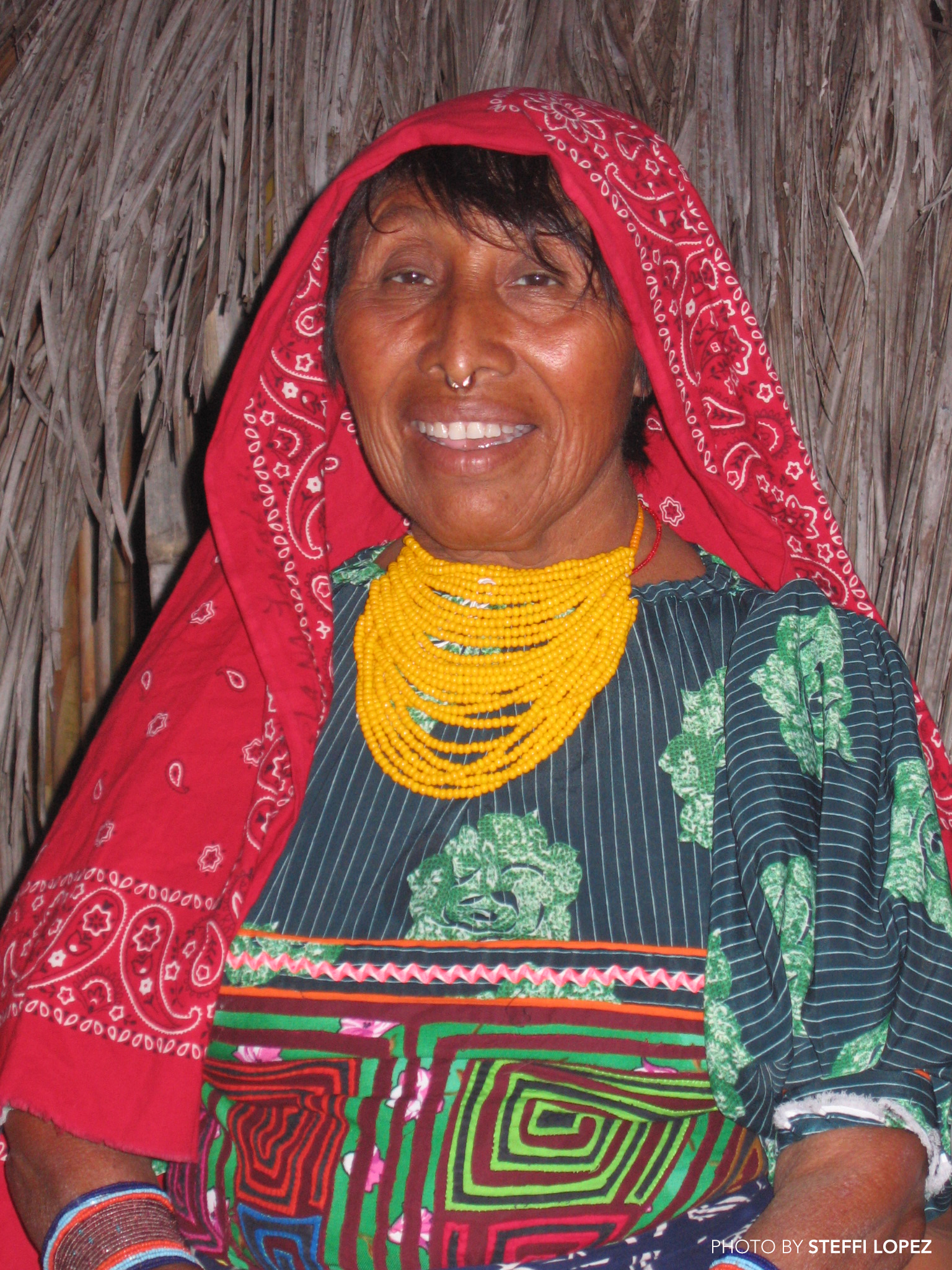
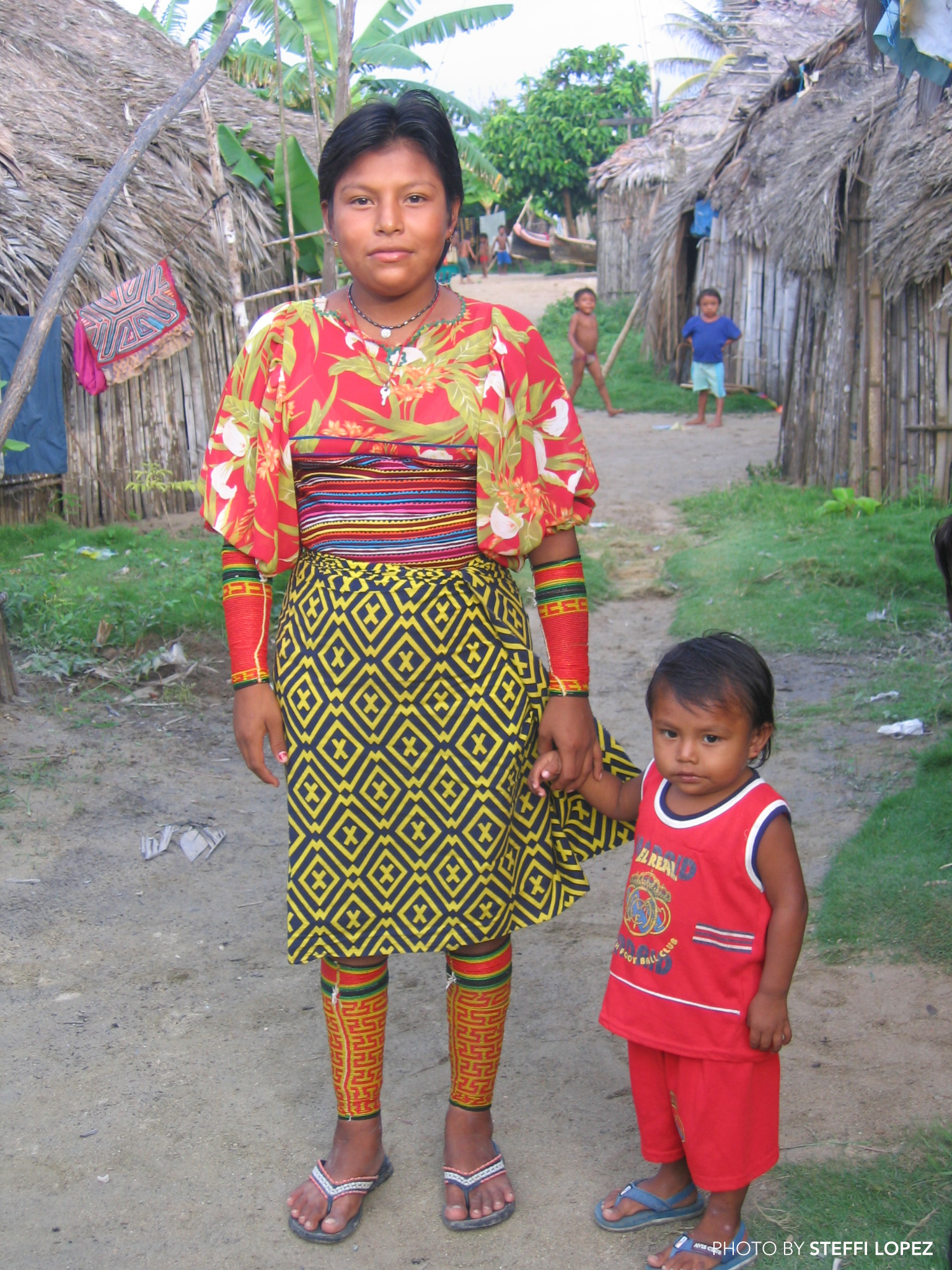
Panama is home to seven indigenous cultures, the most recognizable of them being the Kuna people, who mainly live in the San Blas Archipelago within Kuna Yala. A Kuna is quite easy to spot thanks to the vibrant colors that are incorporated into their traditional dress. The main articles of a Kuna woman's attire are the mola, muswe, nose piercing, and leg wrap.
Mola
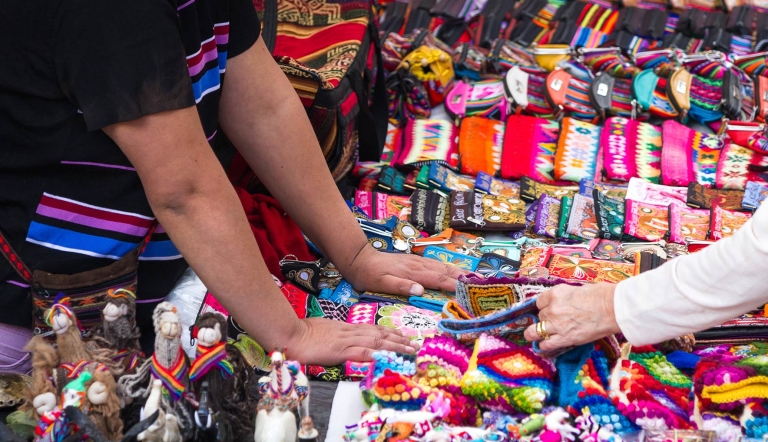
Mola, which has come to be representative of the entire Kuna culture, means fabric or shirt in traditional Kuna language. These pieces of cloth are elaborately designed and hand-sewn for the front and back of Kuna women's blouses. They use a reverse appliqué method to create generally geometric or animal designs. The design is formed by sewing together two to seven different layers of cloth and then cutting out various shapes on the different layers. Each mola can take from two weeks to six months to make.
Muswe
This is the typical head scarf that a Kuna woman wears. The most common muswes have red and yellow designs, though they can also be multicolored. Whether worn on their head or over their shoulders when it gets too hot, it is seen as a sign of respect to have a muswe at all times.
Ico-Inna
Ico-inna is a very important ritual in a young Kuna girl's life. Translating into "the needle festival", this feast is celebrated by the young girl getting her septum pierced. Because gold is precious to the Kuna, she wears a gold hoop in her nose for the rest of her life to symbolize how the female is a treasure.
Uini
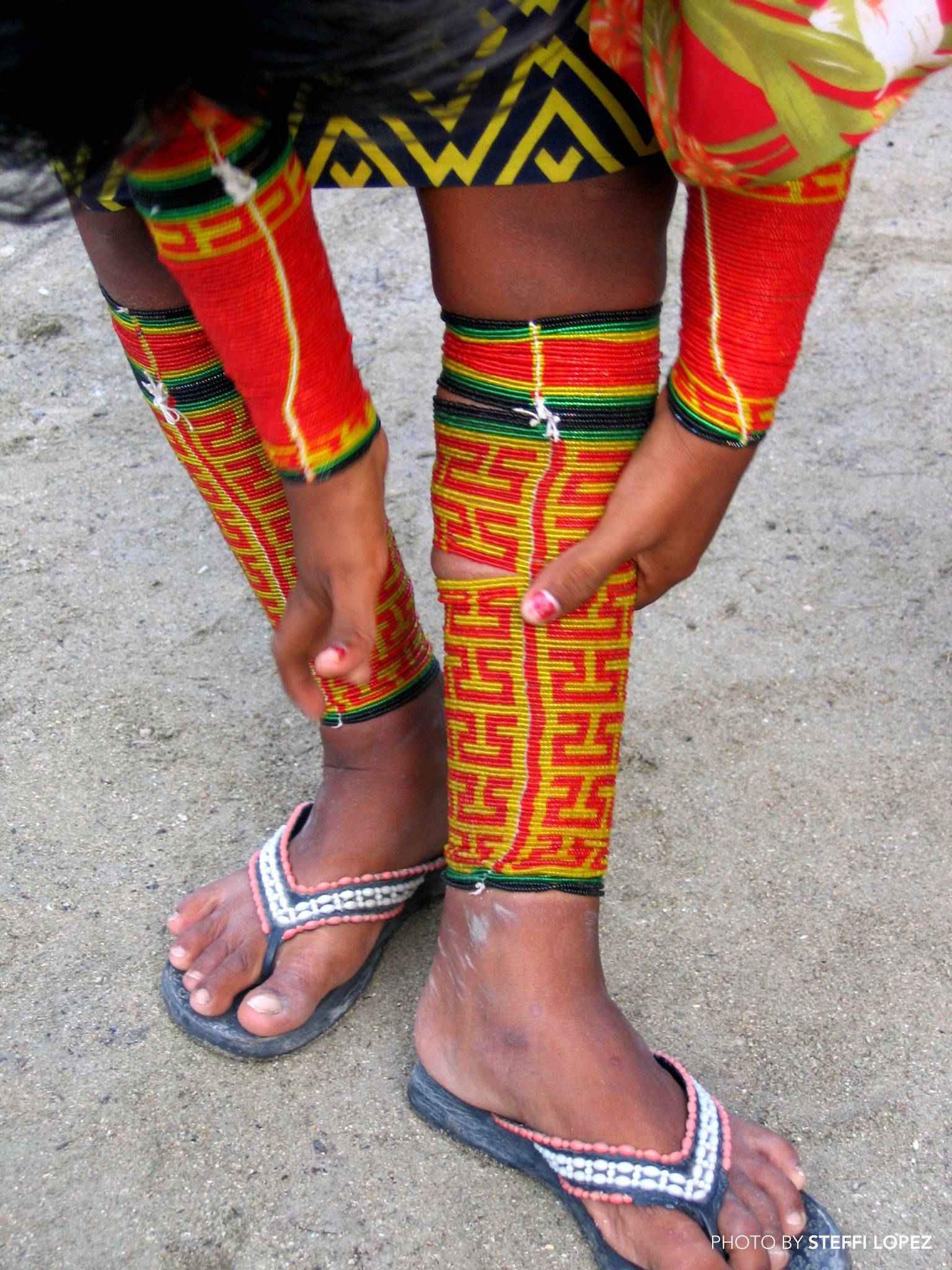
The beaded wrapping on a Kuna woman's arms and legs is called uini, but is more commonly referred to as chakira. It is expected of women to wear these beginning the day of their puberty ceremony and continue wearing them as a sign of their culture and tradition. Yards of string are looped through tiny glass beads which then are systematically wrapped and tied around the appendages, making different patterns with various colors.
While the Kuna Yala area is quite small and secluded, the Kuna people have been able to live in their own autonomous region, continue their indigenous culture, and embrace their traditions by sharing them with people from around the world.