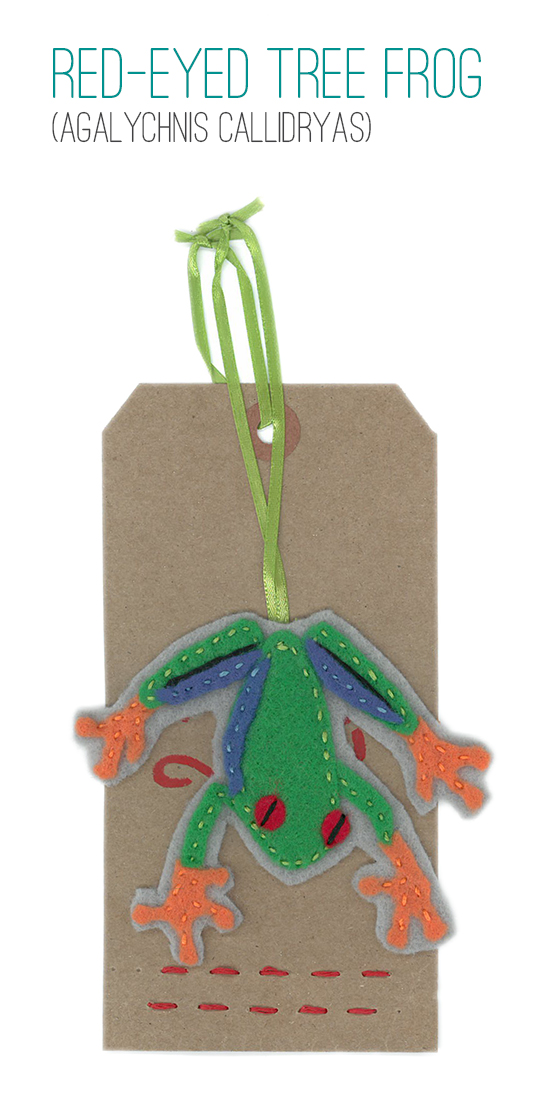
 Red-eyed Tree Frog (Agalychnis callidryas)
- By day, red-eyed tree frogs depend on the startling red of their eyes and brightly colored feet and legs to make predators think twice about eating them
- By night their bright green bodies are able to over-stimulate nocturnal predators' eyes and leave behind a ghost image which confuses predators as the frogs jump away to safety.
- These frogs sleep during the day camouflaged on leaf bottoms with their eyes closed and colorful markings covered.
- Unlike dart frogs, their brightly-colored, rain forest-dwelling cousins, red-eyed tree frogs are not poisonous.
Red-eyed Tree Frog (Agalychnis callidryas)
- By day, red-eyed tree frogs depend on the startling red of their eyes and brightly colored feet and legs to make predators think twice about eating them
- By night their bright green bodies are able to over-stimulate nocturnal predators' eyes and leave behind a ghost image which confuses predators as the frogs jump away to safety.
- These frogs sleep during the day camouflaged on leaf bottoms with their eyes closed and colorful markings covered.
- Unlike dart frogs, their brightly-colored, rain forest-dwelling cousins, red-eyed tree frogs are not poisonous.